
Eat for Health First, and Weight Loss Second
A subtle but impactful mindset shift that can help you on your journey of well-being and weight loss is ‘Get healthy to lose weight, rather than lose weight to get healthy.’ By shifting our focus to long-term health and disease prevention, we will be more likely to eat foods that promote cellular function, and in-turn, better health. Well-being is usually reflected by our waist size, since poor health and physiological dysfunction can often manifest as extreme weight gain (or weight loss). Of course, weight loss does not automatically mean better health, if you are nutrient deficient. In fact, sometimes overly rigid or improperly guided diets can impede optimal health and weight loss efforts. This doesn’t mean you won’t have to reduce calories or adhere to a more structured plan which incorporates healthier choices, but for long-term adherence, it helps if you view this program as more of a sustainable, health-promoting lifestyle, rather than a short-term nutrient-deficient weight loss diet.
Focus on Eating Whole Foods
By focusing on eating whole foods, we will be less likely to eat processed foods which contribute to obesity. For patients with cardiometabolic disorders, various eating patterns, such as the Mediterranean Diet, have been shown to significantly reduce cardiovascular risk factors. Taking these facets and other functional nutrition principles into consideration, including weight loss (losing fat while increasing muscle), try to consume:
- Protein: 1.2-1.5g/kg per day (or minimum 1/3 of daily caloric intake)
- Animal Sources: Lean pasture-raised poultry, wild-caught, low-mercury fish (salmon, sardine, herring), grass-fed meats (lamb, beef, other wild game)
- Plant Sources: Natto, tempeh, tofu, etc.
- Protein Powder: Whey, hemp, pea, rice, egg, soy
- Vegetables: 5 + servings / day (1 serving = 1 cup raw greens or ½ cup cooked greens)
- Predominantly non-starchy: artichoke, arugula, asparagus, beets, cabbage, eggplant, garlic, leeks, microgreens, mushrooms, spinach, watercress, etc.
- Starchy (limit to 1 serving/day): acorn/butternut squash, plantain, potatoes
- Include ample cruciferous vegetables like broccoli, cauliflower, cabbage, etc.
- Whole Grains and Legumes: 2-4 servings / day
- Gluten-free whole grains: amaranth, oats, quinoa, rice
- Gluten-containing whole grains: barley, couscous, semolina
- Legumes: beans, black soybeans, edamame, green peas, hummus
- Nuts and Seeds: 2-3 servings / day; unsalted & unsweetened preferably
- Walnuts, almonds, chia seeds, flaxseeds, pumpkin seeds, sunflower seeds
- Healthy Fats & Oils: 4 servings / day; cold-pressed and high in monounsaturated and polyunsaturated fatty acids (watch portions, i.e.: 1 serving of olive oil = 1 teaspoon)
- Avocados, extra-virgin olive oil, fish oil, flaxseed oil, cod liver oil
- Antioxidant-Rich Fruits: 2 servings / day
- Blueberries, lemons, pomegranate seeds, apples (limit dried fruit and fruit juices since higher in sugar)
- Dairy and Alternatives (if tolerated): 1-2 servings / day
- Kefir, Greek or soy yoghurt
- Fiber: Aim for both soluble and insoluble fiber, with intakes of 25-35g / day (5g/serving)
- Soluble: oat bran, barley, nuts, seeds, beans, lentils, peas, and some fruits and vegetables – helps slow digestion, feed beneficial bacteria, trap toxins, and eliminate dietary cholesterol and fat
- Insoluble: found in the bran (outer coat) of vegetables and whole grains
- Filtered/Mineralized Water – aim for 8 cups (if using reverse osmosis water, be sure to add back trace minerals)
As part of a modified Mediterranean eating plan, limit the following:
- Limit added sugar to <36g/day for men (9 teaspoons) & <25g/day for women (6 teaspoons)
- Limit processed foods, soda, fried foods, fast foods, artificial sweeteners, processed meats
- Limit saturated fatty acids to less than 10% of calories; and try to eliminate trans fats
- Limit red meat and butter to <2 servings/week. If consuming, opt for pasture-raised/grass-fed since higher in more beneficial omega-3 fats.
- Limit high-mercury fish, including tilefish, swordfish, shark, king mackerel, bigeye tuna
- Replace butter with olive oil or avocado oil (limit butter to 1 tablespoon/day)
- In the case of high-temperature cooking, replace both butter and extra-virgin olive oil with avocado oil, since it is higher in phytosterols with a higher smoke point (less rancid)
- Limit sodium to <2,300 mg per day, paying attention to high-sodium foods such as olives, capers, salt-cured cheeses, anchovies (can be eaten, just watch portions)
- Limit wine to no more than 1 glass per day for women, and 1 glass per day for men
Try to Eat a Balanced Portion of Protein, Fat, and Carbs at Each Meal
Macronutrients fall into 3 major categories: Protein, Fat, and Carbohydrates. Certain foods will often fall into multiple categories, like nuts and salmon, which are healthy sources of both fats and protein. For healthy weight loss, you’ll want to focus on consuming a balanced diet consisting of approximately 35% of calories from protein, 30% of calories from fat, and 35% of calories from carbohydrates. Although you might be following a specific diet with more restrictions, for most people, a predominantly whole foods diet containing adequate healthy sources of proteins, fats, and unrefined carbs (vegetables, whole grains) with each meal provides a healthy balance of nutrients while stabilizing glucose levels. While there are multiple eating patterns with differing macronutrient ratios that can result in weight loss, the predominant focus should be the types of macronutrients consumed (i.e., non-starchy, unrefined carbohydrates versus starchy, refined carbohydrates – or monounsaturated fats versus saturated / trans-fats).
Focus on filling your plate with protein and vegetables, first and foremost, and incorporating enough healthy fats so that you feel satiated. Weight loss shouldn’t equate to deprivation, otherwise you won’t be able to adhere to the eating plan long-term. By focusing on health first, and weight loss second, you’ll be less likely to ‘fall off the wagon.’ Rather than viewing this program as a diet, it should be taken as a healthy eating pattern and as part of a healthy lifestyle that is sustainable long-term. By eating enough protein and vegetables, including foods rich in omega-3 fatty acids, you’ll feel fuller, and in turn begin to eat less of the refined carbs and sugary snacks.

Try to Eat at Least 3 Meals and Practice Intermittent Fasting Overnight
While there are multiple schools of thought with regards to whether or not breakfast should be consumed or if we should fast for a minimum of 16 hours, for most patients, getting enough calories during the day leads to a lesser likelihood of snacking later on in the evening. Making sure to spread the bulk of our calories between three main meals ensures more energy and better glucose stabilization for most patients. Additionally, a 12-hour intermittent fast (i.e., 7p to 7a) can be advantageous to losing weight without too much difficulty.
Assess Your Energy Needs (Daily Caloric Intake and Macronutrient Targets)
Your basal metabolic rate (BMR) is the energy expended at rest. Your BMR is the minimal number of calories your body needs to perform basic functions like breathing, without factoring in your activity level. Your daily caloric intake is calculated using your Total Daily Energy Expenditure (TDEE), which depends on a combination of factors, including your weight, height, BMR, activity level, and body fat percentage. Using these metrics along with your InBody results, we will come up with your specific macronutrient targets, i.e. the number of calories / grams you should be consuming from protein, fat, and carbs based on a 35% protein, 30% fat, and 35% carbohydrate eating pattern.
Increase Both Aerobic and Anaerobic Exercise
Although weight loss is achievable through diet alone, for best results which entail muscle gain and fat loss, you’ll want to increase your movement throughout the day. Ideally, you’ll want to commit to an exercise program combining aerobic (cardiovascular) and anaerobic (resistance) training. Higher muscle mass means a higher metabolism. In turn, your caloric needs change depending on where you are on the spectrum ranging from sedentary to highly active. Using a BioImpedance Analysis machine like the InBody, we can assess your body fat percentage, lean muscle mass, and more, which gives us a more accurate representation of health than BMI alone. As an aside, for patients with limited mobility, modified and lower impact exercises such as yoga can still be beneficial.
- Aerobic (running, bicycling, swimming, fast walking, etc.) exercise, 30 minutes, 3x weekly
- Anaerobic (resistance training, free weights, etc.) exercise, 20 minutes, 2x weekly
- Stretching / yoga / light walking (may be done in lieu of above activities or in addition to, depending on physical status)
Look to Lose Weight Safely & Gradually for Optimal Results
As a general rule, to lose weight safely, you’ll want to lose no more than 1 to 2 pounds weekly. This equates to a 500 to 1,000 kcal deficit per day. (1lb = 3,500kcal, so 3,500kcal over 7 days = 500 kcal deficit per day). There are various formulas to assess your Ideal Body Weight (IBW). Depending on your TDEE and IBW, we can calculate your daily caloric and macronutrient needs. To attain a higher lean body mass, it helps to eat a higher percentage of calories from protein. For this reason, we chose a 35% protein eating pattern. Moreover, it is important to aim for at least 1.2g/kg to 1.5g/kg of protein to achieve weight loss without muscle loss. It is especially important for patients taking Glucagon-Like Peptide-1 (GLP-1) agonists like semaglutide to retain muscle mass, so higher intakes of protein, combined with resistance training, is crucial.
Track Your Baseline Food Intakes and Monitor Progress
You’ll want to get a baseline evaluation of your current food intake so you can better understand what and how much you are eating. There are many advantages to using an app like MyFitnessPal to track your food, especially in the beginning. You’ll want to take note of the following when tracking:
- Ratio of carbohydrates, fats, and protein eaten (grams / calories)
- Number of calories consumed from cholesterol, saturated, trans-fats, and sugar
- Diversity of your diet (are you eating the ‘colors of the rainbow?’)
After the initial phase, you’ll also want to track intakes to assess whether you are complying with your new caloric targets (based on our calculations). You’ll want to make sure to limit your portion sizes dependent on your target macronutrient needs. With some practice, you’ll begin to know roughly how many grams of protein, fat, and carbs you’re consuming just by looking at the foods eaten (more on that below). One website for tracking your foods is: Free Calorie Counter, Diet & Exercise Journal | MyFitnessPal
Practice Portion Control
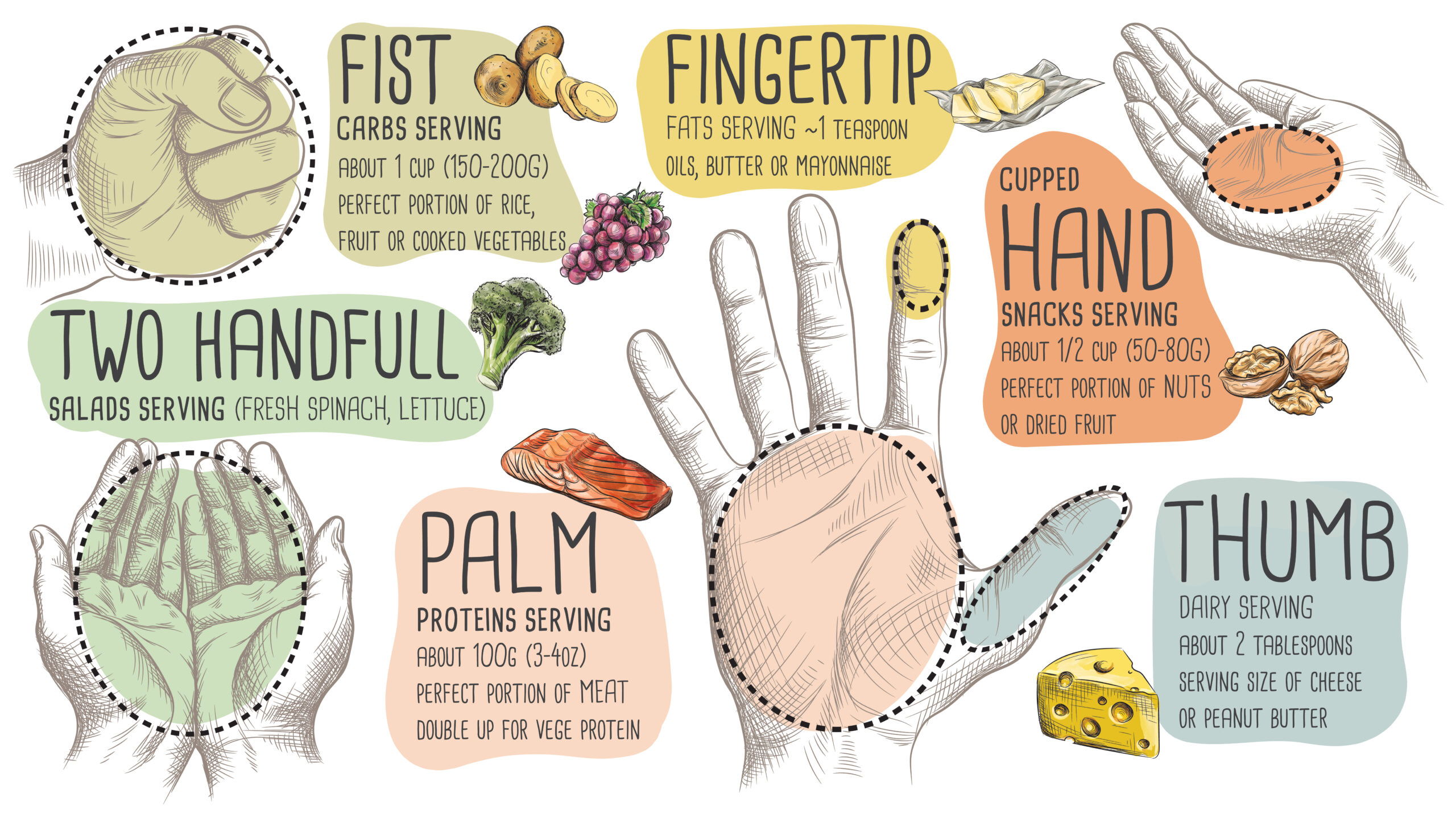
Lack of portion control is one of the biggest contributors to obesity, and impediment to weight loss, if not practiced. Once we’ve assessed your macronutrient targets, you’ll know your target daily caloric intake value (ex: 1,600 calories) and how many grams / calories you should be consuming from protein, fat, and carbs. If not tracking each ingredient and meal on an app like MyFitnessPal, it helps to be aware of portion sizes in order to get a rough estimate of whether or not you are eating too much or not enough. A simple method is to learn portions by using your hand. It is helpful to familiarize yourself with the following diagrams below:
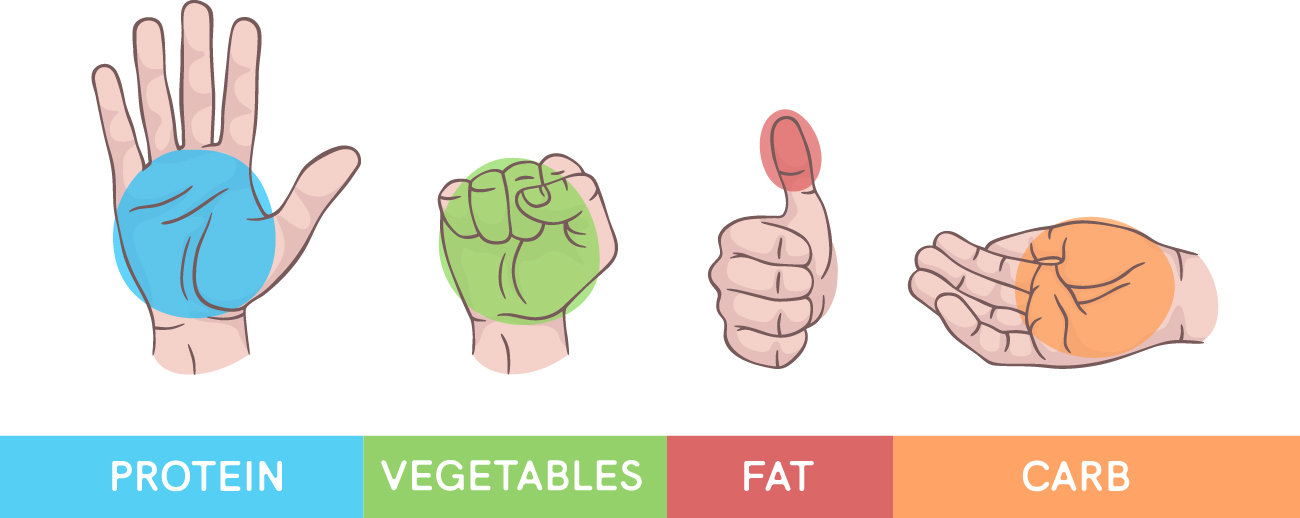
SERVING SIZES:
1 Serving of Protein – Animal & Plant (3-4 oz) = Palm of Your Hand (double for plant-based)
1 Serving of Carbs – Grains (1/2 Cup) = 1 Fist
1 Serving of Carbs – Vegetables (1 Cup) = 2 Handfuls
1 Serving of Carbs – Fruit (1/2 Cup) = 1 Cupped Hand
1 Serving of Fat – Monounsaturated/Polyunsaturated (1 Tablespoon = 1 oz) = 1 Thumb
1 Serving of Saturated Fat / Added Sugar (1 teaspoon) = 1 Fingertip
Limit Added Sugar & Watch Glycemic Index/Load of Foods
Patients with diabetes, high cholesterol, and other cardiometabolic conditions should pay attention to consuming foods with limited glycemic impact. This translates to eating foods that don’t have high glucose and insulin spiking effects. These foods are termed low Glycemic Index (GI) foods. Low glycemic foods include non-starchy veggies, whole grains, legumes (kidney beans, chickpeas, lentils), nuts (almonds, walnuts), seeds (pumpkin, flax, sesame), and many fruits (berries, peaches). Examples of medium-GI foods include most whole-grain breads and grain products, brown or white basmati rice, bananas, and raisins—including the majority of starchy veggies like potatoes. Foods containing refined sugars, artificial sweeteners, and refined grains cause sharp increases in blood sugar levels and are thus high Glycemic Index. In addition to the Glycemic Index is what is called Glycemic Load, which takes into account the fiber content of food. The Glycemic Load is even more relevant since some foods that are high Glycemic Index may actually be low Glycemic Load, as fiber helps to stabilize high glucose levels.
Rather than skipping fruit altogether due to their sugar content, choose fruits wisely, and even more important, control your portions. Opt for fruits lower in sugar while high in fiber and antioxidants. To avoid spikes in blood sugar, it helps to pair the fruit with protein and fat, like nut butter, and additional fiber, like veggies. Remember that fiber helps to slow the release of glucose from food into the blood. You can make a smoothie combining fruit with healthy fats (avocado), nuts/seeds, and protein. This will be more filling and satisfying, while stabilizing glucose levels. Overall, aim for foods lower than 55 on the Glycemic Index scale, and foods lower than 10 on the Glycemic Load scale. The Cardiometabolic Food Plan highlights these glucose-stabilizing foods in its plan and recipes.
Fruits Low in Sugar / High in Antioxidants:
- Avocados
- Blueberries
- Raspberries
- Strawberries
- Lemons/Limes
- Apples
- Clementines
- Pomegranates
Focus on Diversity of Foods (Eat the Colors of the Rainbow!)
Don’t put all your eggs into one basket. Not only is eating the same types of foods boring (and bland), but this can also promote nutrient deficiencies. Be mindful of the colors you eat each day and try to eat as many colors as you can. Here are some examples of the various colors to eat:
Red: Apples, Beets, Goji Berries, Red Onions, Pomegranates, Radishes, Raspberries
Orange: Carrots, Mango, Nectarine, Orange, Pumpkin, Squash, Sweet Potato, Turmeric Root
Yellow: Bananas, Bell Peppers, Ginger Root, Lemon, Millet, Pineapple
Green: Asparagus, Avocado, Bok Choy, Broccoli, Brussels Sprouts, Edamame, Kale, Zucchini
Blue/Purple: Berries, Cabbage, Eggplant, Grapes, Olives, Potatoes, Purple/Black Rice
White/Tan: Cauliflower, Garlic, Ginger, Legumes, Mushrooms, Nuts, Onions, Sauerkraut, Seeds, Whole Grains
Eat Fermented Foods
Eating for gut health promotes overall health because of the more than 500 species of bacteria that reside in our digestive tract. This directly impacts multiple systems and functions of the human body. These ‘good bugs,’ called probiotics, aid in digestion, vitamin synthesis, metabolism, immune defenses, and more. Probiotics feed on fiber-rich foods, termed prebiotics. It’s important to be mindful to eat a variety of fermented foods to fuel these beneficial bacteria. Intestinal dysbiosis can negatively impact metabolic health in multiple ways; for instance, by modulating satiety-related hormones, which can promote weight gain. Consumption of a diverse array of both prebiotic and probiotic foods helps ensure a more balanced gut flora, thereby promoting overall health.
Prebiotic Foods:
Asparagus, Banana, Dandelion greens, Eggplant, Endive, Garlic, Honey, Jerusalem artichokes, Jicama, Leeks, Legumes, Onions, Peas, Radicchio, Whole grains
Probiotic Foods – Non-Dairy:
Fermented meats, Fermented vegetables, Kimchi, Kombucha, Miso, Natto, Pickled vegetables (raw), Sauerkraut, Tempeh, Yogurt (plain, no added sugar, active cultures)
Probiotic Foods – Dairy:
Acidophilus milk, Buttermilk, Cheese (aged), Cottage cheese, Kefir, Sour cream, Yogurt
Plan Ahead, Stock Your Kitchen, and Simplify Your Meal Prepping
Prepping your meals ahead of time saves time, energy, money, and helps with portion control. Keeping a well-stocked kitchen helps limit going out to eat, which is usually good for maintaining healthy weight. Make sure to stock your kitchen with healthy staples, including healthy snacks you can eat while working or on the go.
Some healthy snacks to keep around the house and eat include:
- Seeds: Pumkin Seeds, Sesame Seeds, Flax Seeds, Chia Seeds, Hemp Seeds
- Nuts: Walnuts, Almonds (Raw), Pecans, Cashews, Brazil Nuts
- Nut Butters: Almond Butter, Cashew Nut Butter, Sunflower Seed Butter
- Fruit: Avocados, Apples, Bananas, Blueberries, Raspberries, Strawberries, Grapefruit, Pomegranate, Kiwi, Nectarines, Grapes
- Veggies: Baby Tomatoes, Broccoli, Carrots, Celery, Cucumbers, Edamame, Sweet Peppers
- Dairy: Greek Yoghurt, Cottage Cheese, Kefir, Mozzarella Cheese
- Eggs (Hard-Boiled)
- Tuna, Raw (Ahi Grade) or Canned (Albacore)
- Smoked Salmon
- Multi-Grain Bread (Dave’s Killer Bread)
- Fermented: Sauerkraut, Kimchi, Pickles
- Protein Shakes or Whey Protein Powder
- Bone Broth (Pacifica)
- Hummus (can make home-made)
- Green Tea (healthy alternative to soda)
Combine Protein/Fats/Carbs for Increased Fiber, Glucose Control & Satiety:
- Hard-Boiled Egg with Avocado on Whole-Grain Bread
- Greek Yoghurt with Blueberries & Chia Seeds
- Mini Sweet Peppers with Black Bean Hummus
- Rice Cakes with Sunflower Seed Butter
- Dark Chocolate (70%) and Raspberries
- Apple Slices with Almond Butter
- Protein Shake with Whey Powder, Spinach, Berries, and Hemp Seeds
Buy a High-Quality Protein Powder and Supplement According to Your Needs
Since we are going to be increasing your protein intake, it helps to add in a quality protein drink. You’ll be consuming this regularly, so you’ll want to make sure it is a high-quality protein powder. Many products sold today contain processed ingredients, fillers, and added sugar, so purchasing a reputable product like the one created by Thorne, is important.
In the case of caloric restriction and/or a diet lacking in a variety of phytonutrients, it might make sense to also supplement with a medical-grade multivitamin to ensure adequate nutrient intakes are being met. Depending on your diet, you may not be getting enough vitamins and minerals your body needs. Patients with cardiometabolic disorders may especially benefit from a variety of additional research-backed supplements that mitigate high cholesterol, hypertension, inflammation, and more. Of course, you’ll want to consult with us prior to beginning a new supplement regime, but it’s good for you to be informed about the utility of natural treatments too.
- High-potency medical-grade Multivitamin / Amino Acid formulation (Thorne)
- Magnesium Glycinate (aids smooth muscle relaxation; hypertension; glucose regulation)
- Omega-3 EPA/DHA (for dyslipidemia; inflammation; metabolic and brain health)
- CoQ10 or Ubiquinol (for cellular energy; an antioxidant; crucial for patients on statin)
- Vitamin C (potent antioxidant, anti-inflammatory)
- Niacin (aids atherosclerosis; may lower LDL & triglycerides while increasing ‘good’ HDL)
- Alpha Lipoic Acid (helps regulate blood sugar levels)
- Ginkgo Biloba (may reduce inflammatory CRP, insulin resistance, and inflammation)
- Digestive Enzymes (aid digestion; helpful for delayed gastric emptying, malabsorption)
- Magnesium Threonate (the threonate form of magnesium is helpful for relaxation and sleep)
- Additional supplementation based on unique deficits (i.e., Vitamin D, Iron, B-Complex, etc.)
Toss Processed Foods and Replace with Healthy Selections
Try to eliminate as many processed foods as you can, along with unrefined carbohydrates, added sugar, artificial sweeteners, and alcohol. Here are some additional tips:
TOSS: REPLACE:
Refined Breads and Cereals -> High-Fiber, Whole Grain (Steel-cut Oats, Homemade Granola, Sprouted Grains)
Ramen and Spaghetti Noodles -> High-Fiber, High-Protein Noodles (Black Bean or Quinoa Noodles)
Sugary/Salty Sauces & Dressings -> Real Spices, Herbs, Vinegar and Plant Oils (Cumin, Ginger, Turmeric, EVOO, Balsamic Vinegar, etc.)
Sweets and Candy -> 70% + Dark Cocoa, Dates, Raisins, Currants, Berries
Soda and Flavored Drinks -> Water with Lemon or Flavored with Real Fruit, etc.
Remove Environmental Toxicants
Research has shown a direct association between toxicants found in plastics, cookware, skincare products, perfumes, cleaning products and more—and altered levels of hormones which may contribute to inflammation and obesity. Try to replace plastic with glass, as much as possible, and Teflon or aluminum-based cookware with ceramic, stainless steel, or cast-iron. Indoor air quality is just as important, so purchasing an air purifier or high-quality HEPA filter to reduce indoor pollutants, mold, and dust which might carry harmful microbes. If you have a high exposure to toxins and chemicals, then infrared or steam sauna for 30 minutes twice weekly may enhance detoxification through sweating.
Practice Mindful Eating & Cooking Methods
Generally, it is advisable to cook foods at lower temperatures for longer. This is because harmful byproducts like glycation end products are created during high heat, which ends up causing cellular damage and contributing to high cholesterol and plaque buildup. Try not to over-steam vegetables. If your meat is getting burnt or your vegetables brown, you’ve likely cooked for too long. In terms of a mindful eating practice, it is beneficial to ‘rest and digest.’ Eat slowly, so you digest and assimilate foods thoroughly. This includes ‘chewing’ even your smoothies to prompt release of digestive enzymes to aid digestion.
Hate Difficult Recipes? Focus on Simplicity 1st & Adding Variety 2nd
Cooking doesn’t have to be difficult and there is no need to follow recipes if you don’t want to. Initially, you can simply focus on combining whole foods, then adding more complex recipes and variety later. For instance, oven-baked wild salmon with green beans and almonds (one pan) with quinoa. You can simply add lemon juice to salmon, along with herbs & spices you enjoy, like cilantro, basil, salt/pepper, etc. Don’t be afraid to use your taste buds and experiment with what simply tastes good. For a simple home-made salad dressing, simply mix olive oil with lemon juice and season with salt & pepper. You can try one recipe each week, to vary your breakfast, lunch, and dinner selections.
Examples of Simple & Healthy ‘Non-Recipe’ Meals:
Breakfast: Hard-boiled eggs (2) with avocado (1) on multigrain bread (1 slice)
Lunch: Chicken salad with chicken breast (4 oz), romaine hearts (1-2 cups), handful of baby tomatoes, and goat cheese sprinkled on top. For the dressing, just mix 1 tablespoon of olive oil with 2 tablespoons of lemon juice, with a pinch of salt and pepper.
Snack: Greek yogurt (1 cup) with blueberries (1/2 cup) and chia or flax seeds (1 Tablespoon)
Dinner: Baked salmon (6 oz) with broccoli florets (1 cup) and quinoa (1/2 cup)
Dessert: Dark chocolate with raspberries (1/4 cup)
Don’t Forget Lifestyle Factors such as Adequate Sleep, Stress Reduction & Happiness
Millions of Americans suffer from lack of sleep or interrupted sleep. Unfortunately, not getting enough rest has been shown to be associated with obesity. Sleep apnea is much more common than people think and has a terrible impact on cardiovascular health. Aim for a minimum of 7-8 hours of sleep daily in a completely dark room. Also, it helps to have a consistent daily sleep schedule for optimal circadian rhythm. Moreover, try to turn off all electronics one hour prior to bedtime. Sometimes the solution is more involved, so exploring the root causes of your sleep troubles is important.
You probably already know that stress is harmful to your health, but did you know that unhealthy levels of stress can also negatively impact your waistline? Stress hormones like cortisol have many downstream consequences on metabolic health, including obesity. Of course, not all stress is bad. Healthy levels of stress are termed eustress. Obviously, most people are going to have some level of stress from normal life. It becomes more about being able to manage stress in healthy ways. Moreover, if you’re unhappy or dissatisfied with life, you may end up compensating through food. Some people eat more, while others eat less during difficult times. As such, it’s important to remember not only healthy nutrition but also other holistic measures of well-being such as your mental, emotional, and spiritual health. To review, here are other important lifestyle factors that may help reduce stress and increase life satisfaction:
- Engage in a daily mindfulness or meditation activity (deep breathing, yoga)
- Nourish creative outlets that may have been abandoned
- Enjoy the outdoors / nature for at least 15-20 minutes daily
- Foster positive relationships with loved ones
- Practice self-compassion and self-acceptance
- Write daily or weekly gratitude journal entries (think of 1-3 things to be thankful for prior to sleep or upon waking up)
Become Aware of Your Barriers and Practice Healthy Habits Until Routine
No one is perfect, and accepting this, along with accepting yourself no matter what stage you are in, goes a long way towards living a healthier and more peaceful existence. Rather than going about a major lifestyle change with an all-or-nothing mindset, realize that there will be good days and bad days, and that we are here to support you along the way through both the ups and the downs.
While most of this guide and our sessions are centered around weight loss and nutrition, I hope you also realize that this is just one part of a much larger puzzle. That said, the foods we choose to eat are incredibly important to our vitality, as food is not just calories but information for our cells. It takes repetition and daily practice to make habits stick, whether ‘good’ or ‘bad.’ And there are quite a number of hurdles we have to jump through to make a major lifestyle change, some of which are difficult to control or aren’t our fault. So have some empathy for yourself but try to become aware as to what these barriers are so that you can be more mindful to combat them.
Most Common Barriers to Eating Healthy:
- Failing to Plan
- Portion Control
- Eating Out / Processed Foods
- Not Eating Enough Nutrient-Dense Foods (Then Snacking)
- Misconceptions / Misinformation (That Healthy is Difficult/Not Satisfying/Confusing)
- Not Knowing Your Internal Motivators for Change (External Motivators Aren’t Enough)
- Lack of Social Support (Family, Friends, etc.)
- Judgment, Shame and Lack of Self-Acceptance
- Fear of Change and the Unfamiliar (Cooking, New Routine, etc.)
Much of this list comes down to not only information, but psychology. Knowledge is power but the application of that knowledge is the crucial component. If we should work together, I will be an integral part of supporting you to better health, and here to guide you along the way with empathy, rather than as your drill sergeant. Rather than viewing me as simply your external accountability partner, view me as helping you find your own intrinsic motivators to adopt new healthy habits.
Hopefully, with the help of this guide, you’ve garnered some knowledge and awareness, and in turn, you’ll be able to remove some of the most common barriers to eating healthily while taking on new healthy lifestyle changes over time.


