An Overview of Functional Medicine
Functional medicine is an individualized and evidence-based therapeutic approach aimed to restore biological function to an optimal level and improve patient health. The underlying causes of chronic diseases are addressed in a systematic manner by examining the complex interconnections among genetics, environment, and lifestyle. The utilization of the functional timeline and matrix helps guide practitioners to understanding a patient’s complex story in order to intervene at multiple levels of dysfunction. These assessments aid in the process of early detection, prevention, and in coming up with a personalized treatment plan.
As with many functional practitioners, my interest in functional diagnostics was sparked by personal health challenges. My functional medicine physician really helped me uncover the root causes of symptoms I was experiencing through more advanced lab testing. Throughout this process, I became interested in natural health and decided to pursue certifications in functional medicine health coaching (through FMCA) as well as my M.S. in Human Nutrition and Functional Medicine through University of Western States.

The Functional Medicine Timeline
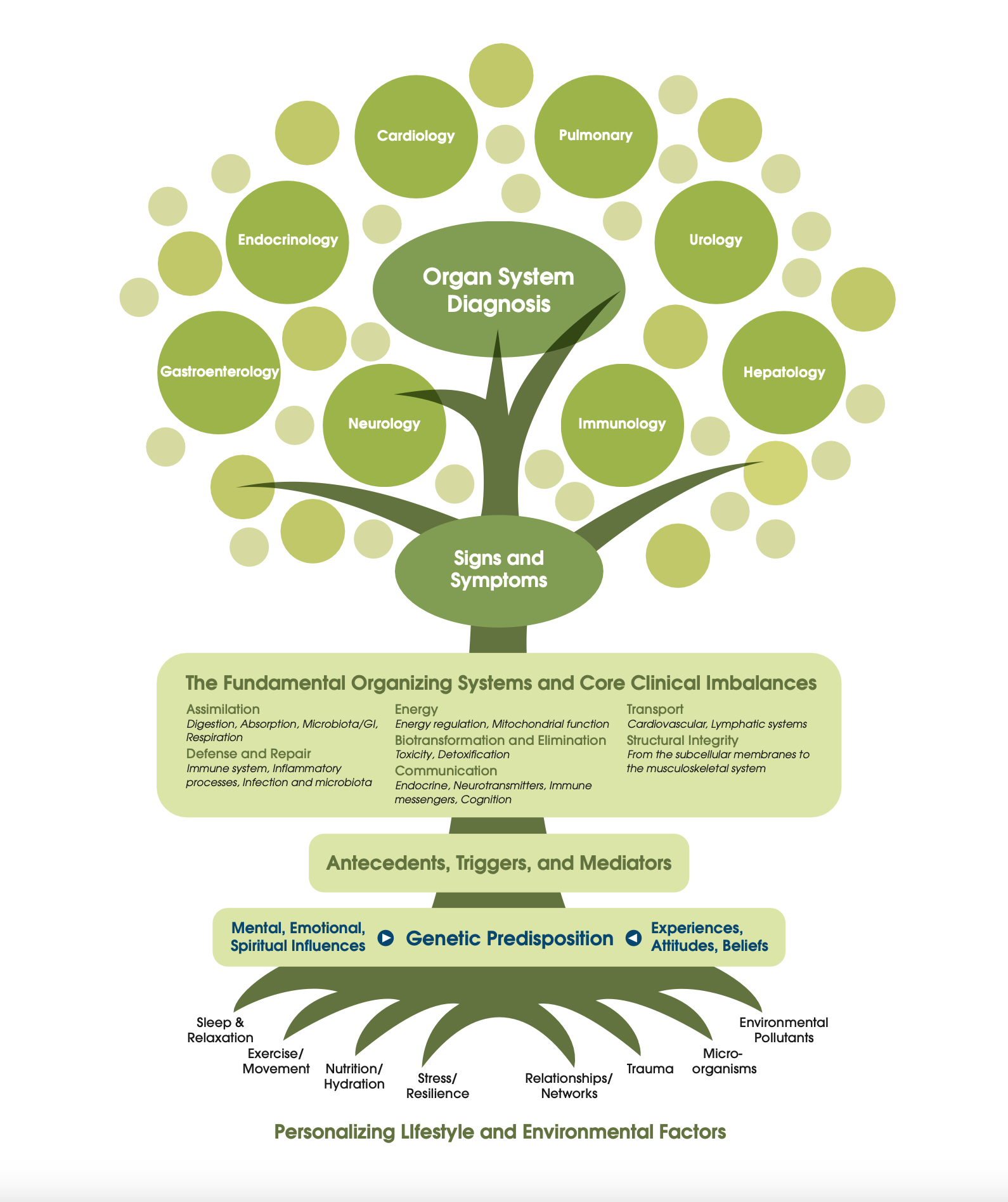
The functional medicine timeline explores a patient’s unique antecedents, triggers, and mediators. In addition, the timeline serves to chronicle key events in a patient’s life story from birth to present time, helping to clue in on life occurrences that may have contributed to disease pathogenesis. More specifically, antecedents are genetic or acquired factors that predispose an individual to illness. Preconception or prenatal factors are also included here; for instance, considering the physical and mental health status or living conditions of the patient’s mother. Examples of antecedents include inherited hypercholesterolemia; in-utero factors such as maternal stress or smoking; as well as cesarean versus vaginal delivery. Triggers, or triggering events, are factors that provoke the symptoms and signs of illness. Examples of triggers include physical or emotional trauma; significant stressful life changes such as a divorce; surgeries or infections; and antibiotic or chemical exposure. Mediators, or perpetuators, are ongoing biochemical or psychosocial factors that contribute to pathological alterations and dysfunctional responses. These include chronic sleep deprivation or stress; poor diet; insufficient exercise; ongoing toxicant exposure; and so on. Current symptoms are listed under ‘current concerns.’ Understanding all of these factors facilitates the delivery of an appropriate and targeted treatment plan, while engaging the patient into a therapeutic partnership with the practitioner.
The GO-TO-IT Model
Functional Medicine uses the GO TO IT Model which stands for: Gather information / oneself; Organize on the Timeline and Matrix; Tell the patient story; Order your priorities; Initiate assessment and care; and Track progress. For the timeline, the practitioner gathers information using forms such as the Medical Symptom Questionnaire (MSQ); Diet, Nutrition & Lifestyle Journal; Sleep Questionnaire; Exercise History; Toxin Exposure; and others. The patient is also interviewed and the practitioner carefully writes up a detailed assessment. Utilizing forms such as the Toxin Exposure history can elucidate the origin of ‘mystery’ symptoms in a patient. For instance, a trigger for a patient could
have been working in a toxicology laboratory where they were exposed to a variety of carcinogens. This, combined with antecedents such as a family history of liver failure and various SNP variants in detoxification pathways, could help explain current symptoms. Ongoing mediators here could include a sedentary lifestyle and lack of exercise, which further impairs detoxification pathways. In another patient with Crohn’s disease for example, antecedents may involve a family history of Intestinal Bowel Disease and being delivered by C-section. The latter has lasting negative consequences on the patient’s microbiome since they were not exposed to beneficial bacteria lining the vaginal canal during delivery. Triggering events in this case may include frequent antibiotic exposure, thus further damaging the microbial ecosystem of the gut, thereby contributing to increased inflammation. Lastly, ongoing mediators may include a high-fat and low-fiber diet which lowers the diversity of beneficial gut bacteria. Knowledge and insights into a patient’s antecedents, mediators and triggers help elucidate the mechanisms by which a patient is predisposed to an illness or why symptoms are continuing to manifest.
A Patient-Centered Model
In contrast to conventional medicine, which is a disease-centered model, the functional medicine model is patient-centered; targeting critical imbalances of the individual patient and intervening at five levels of functionality: whole-body/macro-level; organ system; metabolic/cellular; sub-cellular/mitochondrial; and at the level of genetic expression. This way, by examining a patient’s diet, nutrition, lifestyle, and toxin exposures, interventions are specifically chosen and based on the unique patient as opposed to a generalized diagnosis. The Functional Medicine timeline thus serves a crucial part in the prevention, early assessment, and successful management of chronic diseases today by attempting to identify and correct lifelong imbalances in genetic, environmental, and lifestyle factors.
The Major Elements of the Functional Medicine Matrix
The seven major elements or core clinical imbalances (nodes) viewed under the Functional Medicine Matrix include “Assimilation,” “Defense and Repair,” “Energy,” “Biotransformation and Elimination,” “Communication,” “Transport,” and “Structural Integrity.” Uncovering each patient’s unique clinical imbalances on the Functional Medicine Matrix enables practitioners to therapeutically target each of these nodes while prioritizing treatment of the nodes with the highest level of dysfunction. Thus, instead of merely treating symptoms, Functional Medicine aims to target the root causes of disease.
Assimilation refers to imbalances in digestion, absorption, and/or gut microbiota. Imbalances in any of these components can lead to a wide range of effects, including improper nutrient absorption or intestinal dysbiosis. For example, impaired GI motility can lead to Small Intestinal Bacterial Overgrowth (SIBO), a condition characterized by an overgrowth of harmful bacteria. SIBO can result in vitamin deficiencies such as iron or B12. Treatment involves improving gut motility with hyperkinetic agents (in some cases), targeting bacteria with specific herbal antimicrobials (oregano oil, etc.), and micronutrient replacement.
Defense and Repair involves imbalances in the immune system, leading to infections, allergies and/or inflammation. The majority of the immune system is localized in the gut, with the gut-associated lymphoid tissue and secretory IgA providing immunological defense against pathogenic bacteria and food antigens. The gut microbiome helps modulate
inflammation and improve oral tolerance. For instance, patients with autoimmune disorders such as Celiac Disease may have concurrent IgA deficiency, increased food hypersensitivities and chronic inflammation. Dietary treatments can include removing antigenic foods through an elimination diet, strain-specific probiotics such as Saccharomyces cerevisiae, and adherence to a long-term gluten-free diet.
Energy refers to imbalances in mitochondrial function and cellular energy production. Mitochondrial dysfunction can lead to defective respiratory chain function, thereby impairing oxidative phosphorylation and reducing ATP formation. This leads to increases in oxidative stress and systemic disorders. For example, Carnitine palmitoyl-transferase
deficiency involves impaired fatty acid oxidation, resulting in muscle weakness and fatigue. Treatment involves avoidance of a high-fat diet and eating more carbohydrates, while supplemental L-carnitine may also help.
Biotransformation and Elimination refers to imbalances in detoxification and hepatic function. Proper detoxification is vital to removal of environmental toxicants as well as endogenous and exogenous toxins. Lipophilic toxins are converted into water-soluble metabolites via Phase I (cytochrome P450 enzymes) and Phase II (conjugase enzymes)
systems and then eliminated from the body through bile or urine. For instance, detoxification from xenobiotic exposure can potentially be increased by consumption of cruciferous vegetables (cauliflower), antioxidant-rich fruits (blueberries), whey protein, weekly sauna therapy, and N-acetyl cysteine supplementation.
Communication refers to hormone and neurotransmitter imbalances. Neuroendocrine imbalances can lead to a wide variety of metabolic conditions affecting the brain, pancreas, thyroid, reproductive organs, and more. For instance, PCOS involves excess androgen conversion to harmful estrogens (16α-hydroxyestrone) and glucose dysregulation. Treatments might involve down-regulating aromatase with an antioxidant-rich diet and supplemental alpha-lipoic acid for lowering levels of blood glucose.
Transport involves imbalances in circulation, such as the cardiovascular or lymphatic systems. Transport distributes nutrients throughout the body and supports the body’s defense functions via the specificity of carrier proteins. For instance, poor blood circulation secondary to vasoconstriction and impaired nitric oxide synthase activity can lead to tissue ischemia. Treatments may include beetroot juice which has potent vasodilative effects, or L-citrulline to enhance NO synthesis.
Structural Integrity views imbalances from the sub-cellular membranes to the musculoskeletal system. Since structure influences function, structural impairments can negatively impact cellular functions such as hormone receptor activity—all the way to kinesiological defects. Likewise, disturbed function can also lead to altered structure. For instance, intestinal permeability is a condition that results in the breakdown of the intestinal barrier via compromised tight junction integrity. This leads to unprocessed proteins entering the circulation and systemic release of inflammatory cytokines; increasing risks of chronic pain, autoimmune and metabolic disorders. A treatment that targets intestinal permeability is removal of alcohol from the patient’s diet or supplemental glutamine, which repairs the compromised intestinal barrier. Through preventative, targeted, and individualized approaches, practitioners are following through with the six principles of Functional Medicine which include: biochemical individuality; a patient centered model; the dynamic balance between external and internal factors; web-like inter-connectedness; viewing health as a positive vitality; and enhancement of organ reserve for healthy aging.